Skillshare and Udemy both promise to teach you new skills online, but they run on different models: Skillshare is an all-you-can-learn subscription, while Udemy is primarily a pay-per-course marketplace. This comparison covers pricing, course library, certificates, refunds and community, so you can see which one fits how you actually learn. Prices and policies were checked against each platform’s official pages in July 2026, so confirm current rates before you pay.
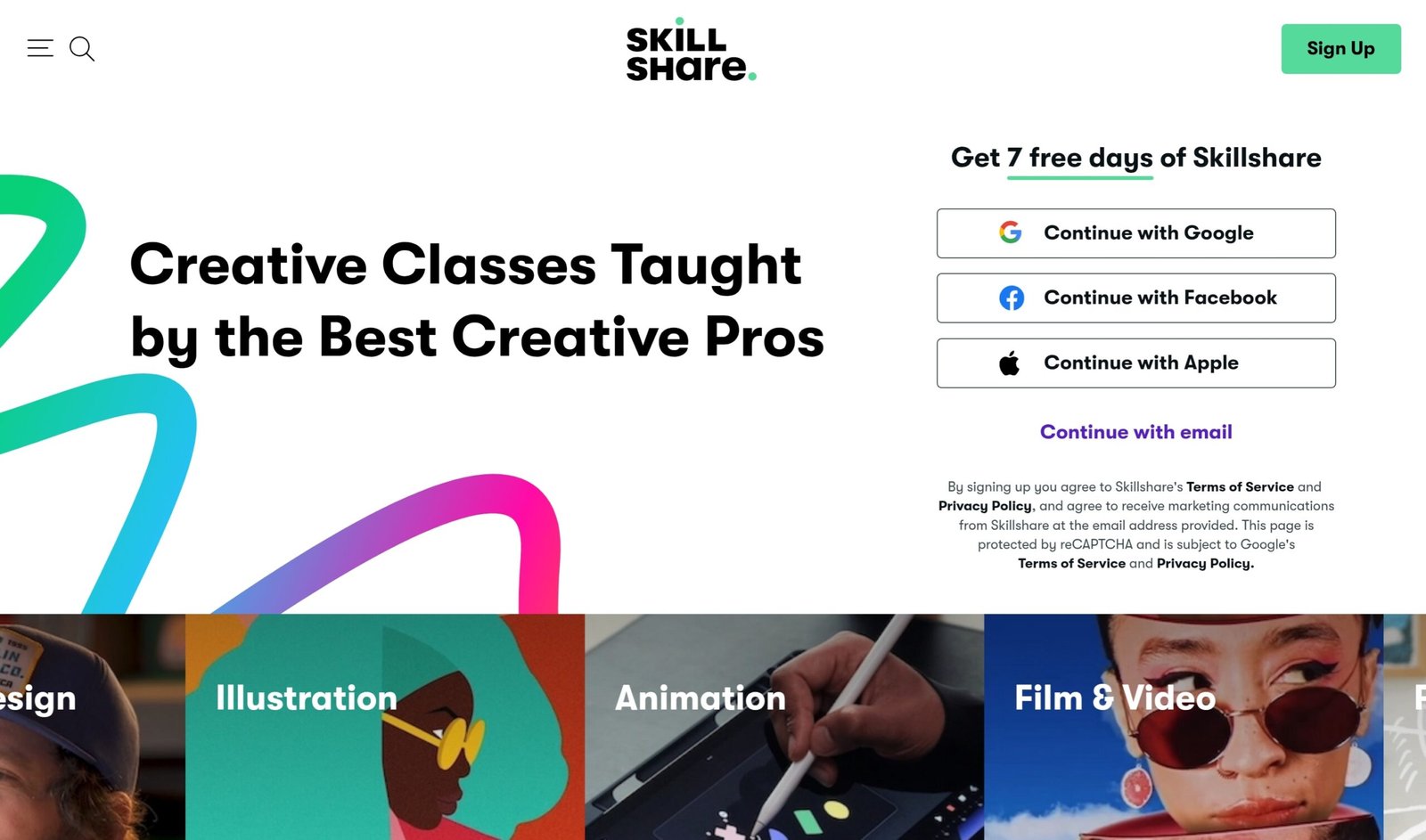
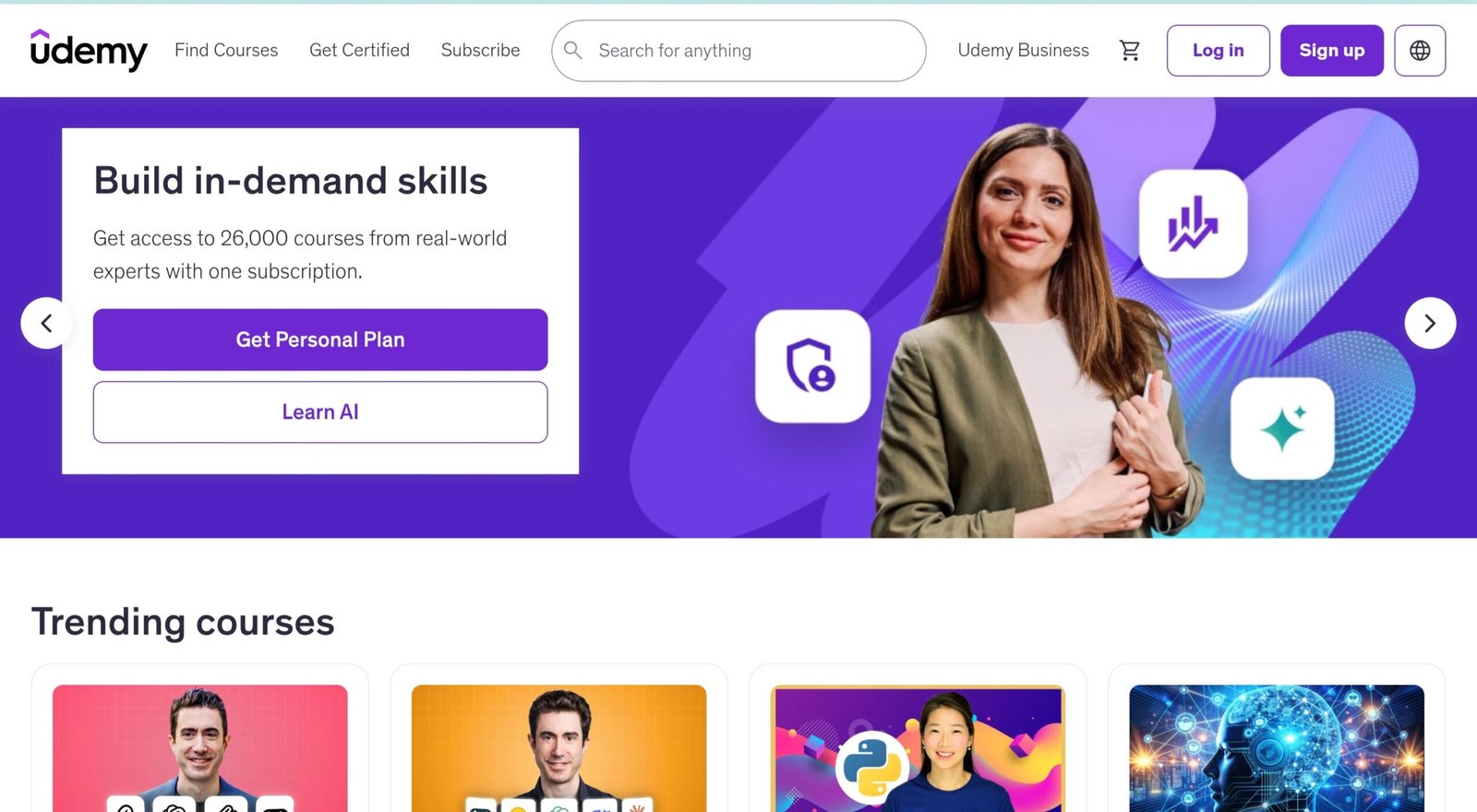
They barely compete for the same learner. Skillshare is a creative-skills subscription. Udemy is a huge course marketplace covering nearly everything, including technical skills Skillshare does not touch, though Udemy now has its own subscription option and a new parent company (both explained below).
Skillshare vs Udemy at a Glance
| Factor | Skillshare | Udemy |
|---|---|---|
| Model | All-access annual subscription | Mostly pay-per-course; a Personal Plan subscription also exists (limited regional rollout) |
| Price | $167.88/year (about $13.99/month) | Courses: $11.99–$199.99 each (frequent sales down to $10–15). Personal Plan: region-based pricing, roughly $20–$30/month in the U.S. |
| Course library | About 30,000+ classes | 250,000+ courses (Udemy’s own current figure) |
| Main categories | Creative and design, business, technology, lifestyle, skewed creative | Nearly everything: development, business, marketing, personal development, IT and more |
| Certificates | Informal per-class certificate through its Achievements system, not accredited | Certificate of completion on paid courses only, not accredited |
| Free access | 7-day trial as standard (longer trials sometimes via promotions) | 450+ permanently free courses; no trial needed for individual purchases |
| Owned by | Skillshare, Inc. | Coursera, Inc. (subsidiary since May 11, 2026) |
| Best for | Creatives, hobbyists and freelancers wanting broad exposure | Anyone wanting a specific, deep, one-off skill, especially technical |
How They Are Fundamentally Different
Skillshare runs on a single annual membership. Pay once and every class on the platform is included, and there is no way to buy an individual class separately. That rewards people who take several classes a year, since your cost per class drops the more you use it.
Udemy is still primarily a pay-per-course marketplace. Every course has its own price, and you keep each course you buy. That suits you better if you only need one or two specific courses a year, because you are not paying for access you will not use.
Udemy also offers its own subscription, the Personal Plan, which gives access to a curated collection of about 26,000 top-rated courses. Unlike Skillshare’s single published price, Udemy sets Personal Plan pricing by country and runs frequent regional promotions, so the rate you are quoted can vary. Recent U.S. pricing has run around $29.99/month. Check Udemy’s pricing page for the current rate, and note that the plan is not available to every learner or region yet. It sits alongside individual course purchases rather than replacing them.
Read each platform on its own
For a full single-platform breakdown, including refund details and common complaints, see our Is Skillshare worth it review, our Is Udemy worth it review and our Is Udemy legit review.
Pricing Compared
Skillshare offers one individual plan: $167.88 billed annually, which works out to about $13.99/month. A monthly-only option exists through the app stores, but it runs closer to $32/month, so it only makes sense for very short-term use. Skillshare for Teams costs $159 per user, per year.
Udemy’s core model is buying courses outright, typically listed between $11.99 and $199.99. Udemy runs near-constant sitewide sales that bring most courses down to roughly $10–15 regardless of list price, and there is no minimum spend, so you can take a single $12 course and never buy another. For the Personal Plan, treat any single number you see quoted, including the roughly $20–30/month range above, as a starting point and confirm your actual rate on Udemy’s site.
| Usage | Skillshare | Udemy |
|---|---|---|
| Heavy user (10+ classes a year) | $167.88 total | Could exceed $150–300 buying 10+ courses individually, or roughly $240–360 a year via the Personal Plan at current U.S. rates |
| Light user (1–2 courses a year) | Still $167.88 (subscription only) | As low as $20–30 total |
| Team or business | $159 per user per year | Udemy Business Team Plan, custom pricing |
Course Library and Categories
Udemy’s catalog is enormous, with over 250,000 courses spanning development, business, marketing, IT and software, personal development, design and more, taught by independent instructors from total beginners to well-known industry names. Independent catalog analyses have put the number closer to 290,000; we use Udemy’s own 250,000+ figure for consistency.
Skillshare is intentionally narrower and leans creative: design, illustration, photography, video, writing and entrepreneurship, organized as shorter classes (often under an hour) rather than long structured courses. If you want deep technical training such as programming languages, cloud certifications or data science, Skillshare’s catalog is thin by comparison. That is Udemy’s strength.
If you are also weighing a corporate-leaning subscription, read our Is LinkedIn Learning worth it review. It works like Skillshare’s subscription model but focuses on workplace skills rather than creative ones.
Certificates: Does Either One Actually Matter?
Many “Skillshare has no certificates” claims online are out of date, so it is worth being precise.
Skillshare does award a certificate, but a lightweight one. Once you watch every lesson in a class and submit the required project, its Achievements system issues a class certificate showing your name, the class title, the teacher, the class length and a unique certificate ID, which you can share to LinkedIn. It is tied to a single short class, it is not accredited, and it carries little recognition outside the platform.
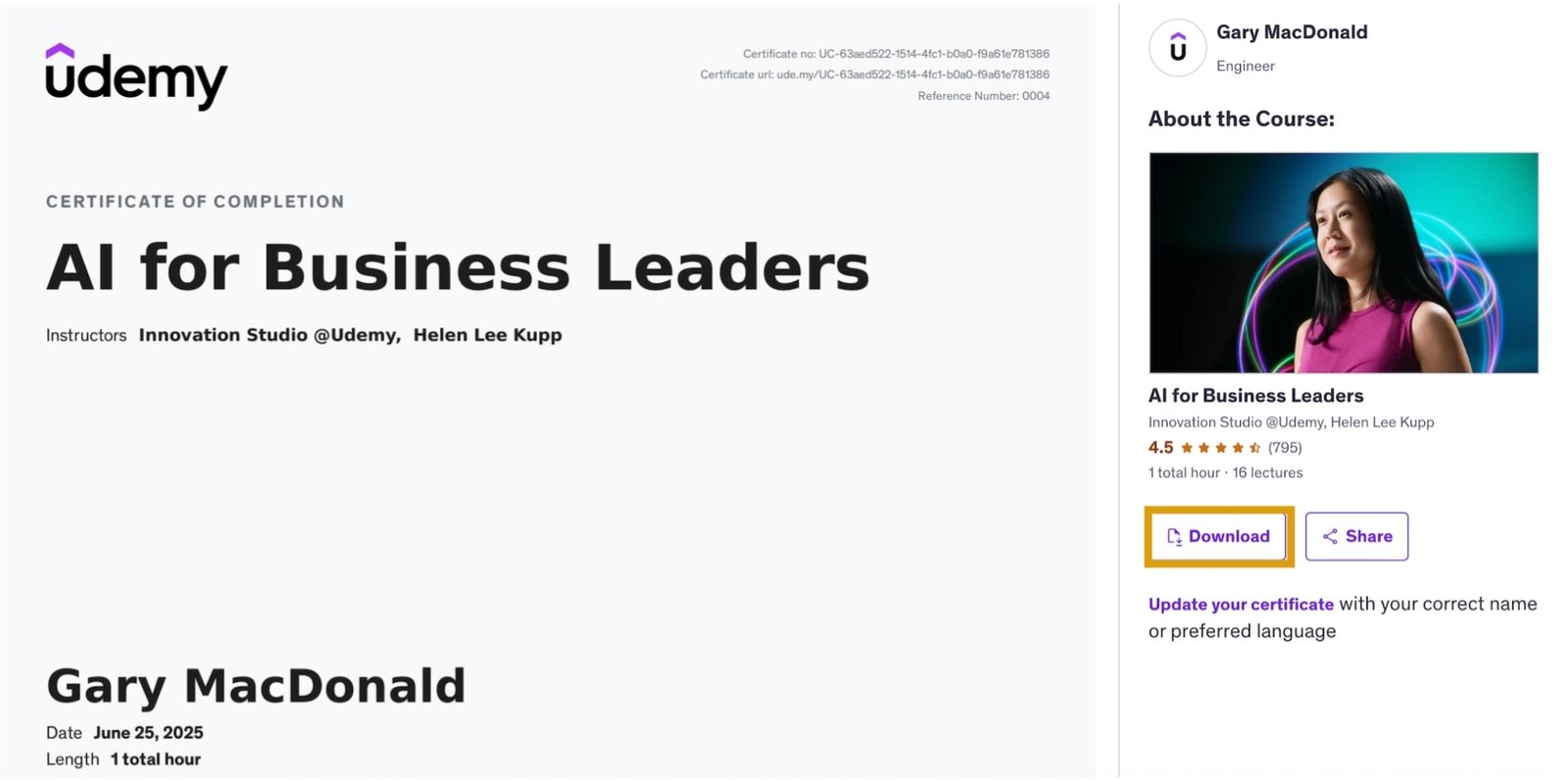
Udemy issues a certificate of completion for paid courses (free courses and practice-test-only courses do not qualify). Udemy states that it is not an accredited institution and that its certificates cannot be used for formal academic accreditation. In practice, the certificate carries moderate weight with employers, especially in tech and marketing roles, as evidence of self-directed learning on a full course. It is not equivalent to a university credential or a recognized certification such as AWS or CompTIA.
Neither certificate is accredited or holds serious formal weight. Udemy’s is built around a complete course and is the more commonly recognized of the two. Skillshare’s is a per-class badge that works better as a personal record than as a resume line.
Course Quality and Teaching Style
Both platforms let almost anyone become an instructor, so quality varies course by course rather than being guaranteed by the brand. The practical difference is format. Udemy courses tend to be longer, split into modules with quizzes and sometimes downloadable resources, and aim at a complete standalone outcome. Skillshare classes are shorter and built around a hands-on project you complete alongside the lessons, which suits creative skill-building better than deep technical mastery.
Community and Learning Experience
Skillshare’s biggest differentiator is its community layer. Every class includes a project, and students post their work for feedback from classmates and sometimes the instructor. For creative fields, that feedback loop adds value you will not get from Udemy.
Udemy is more solitary by design: you watch lectures, complete quizzes and move on. Some courses include Q&A sections or discussion boards, but there is no platform-wide project-sharing community like Skillshare’s.
Free Trials and Refund Policies
Skillshare’s standard signup includes a 7-day free trial, and longer trials (14 days or more) sometimes appear through promotional and affiliate links. You enter payment details upfront, and if you do not cancel before the trial ends you are charged the full annual fee.
Refund eligibility depends on the trial you used. On the standard 7-day trial, you can contact Skillshare support within 48 hours of the charge for a one-time refund, as long as you have not used the service since. A charge after a promotional trial of 14 days or longer is not eligible for a refund. Renewal charges are not refundable either way, and Skillshare sends a reminder email about 30 days before your annual plan renews. EU and UK customers have additional cooling-off rights under local consumer law.
Udemy does not need a trial for individual courses, since you only pay for the course you choose, and 450+ courses are free to try with no payment. Udemy offers a 30-day refund window on individual paid courses, though it can decline requests it flags as abuse, such as heavy consumption before the request or repeated refunds. Its Personal Plan does not carry the 30-day guarantee and is generally non-refundable once charged, except where local law requires it. A free trial, commonly 7 days, is typically offered so you can test it before being billed.
Pros and Cons of Each
- ✓ Unlimited classes for one flat annual fee
- ✓ Strong peer community and project feedback
- ✓ Great for creative, hands-on skill-building
- ✕ Certificates are informal per-class badges
- ✕ Thin catalog outside creative and business topics
- ✕ Narrow refund window (48 hours, standard trial only)
- ✓ Pay only for what you take
- ✓ Massive catalog, including deep technical topics
- ✓ Certificate of completion and a 30-day refund window on individual courses
- ✕ Not accredited, so certificates carry limited formal weight
- ✕ Course quality varies widely by instructor
- ✕ Personal Plan pricing varies by region and is generally non-refundable after the trial
Which Should You Choose?
Pick Skillshare if you are a creative, freelancer or hobbyist who wants to explore design, illustration, photography or similar skills regularly and will realistically take several classes a year.
Pick Udemy if you need one specific, often technical, skill such as a programming language, a certification prep course or a marketing tactic, and would rather pay once than commit to an annual plan. Its Personal Plan is worth a look if you want subscription-style access with Udemy’s technical depth rather than Skillshare’s creative focus.
Use both if you want deep technical courses from Udemy and ongoing creative classes from Skillshare. They overlap very little in what they do best.
Comparing more platforms?
- Is Coursera worth it?, now Udemy’s parent company
- Is LinkedIn Learning worth it?, a workplace-skills subscription
- Is DataCamp worth it?, for data-focused learning
Frequently Asked Questions
Is Skillshare or Udemy better?
Neither is universally better. Skillshare wins for creatives who want unlimited access to design and art classes for a flat annual fee. Udemy wins for anyone who needs a specific, often technical, course and would rather pay once than subscribe, although Udemy now offers its own subscription too.
Does Skillshare give certificates?
Yes, but an informal one. Skillshare’s Achievements system issues a class certificate with your name, the class title, the teacher and a unique ID once you complete all lessons and submit the class project. It is not accredited and carries far less formal weight than a university or industry credential.
Is Udemy accredited?
No. Udemy is not accredited by any regional, national or international accrediting body, and its own FAQ says its certificates cannot be used for formal academic accreditation. It still issues a certificate of completion for paid courses, which carries moderate informal value with employers.
Is Skillshare free?
Not on an ongoing basis. Skillshare discontinued its standalone free classes in September 2021. The only way to access classes without paying is the free trial, after which you are charged the full annual fee unless you cancel.
Is Skillshare or Udemy better for beginners?
Both work for beginners in different ways. Skillshare’s shorter, project-based classes are approachable for anyone new to a creative skill, while Udemy is better when a beginner needs a structured, in-depth course on a specific technical topic.
Is Udemy owned by Coursera now?
Yes. Coursera and Udemy announced an all-stock merger in December 2025, and the deal closed on May 11, 2026, making Udemy a wholly owned Coursera subsidiary. When we last checked, the platforms were still operating separately, with no immediate change to Udemy’s pricing, courses or certificates for existing users.