Is Coursera Worth It in 2026? Full Review
Is Coursera worth it? That depends on which of its several ways of paying you choose, because Coursera sells free audits, single courses, monthly Specializations, the Coursera Plus subscription and full degrees. This Coursera review covers what each option includes, whether Coursera certificates are worth having, whether Coursera is accredited, how the refund rules work, and what changed after Coursera acquired Udemy in May 2026. Plan, price and refund details come from Coursera’s own pages, checked in late September 2026.
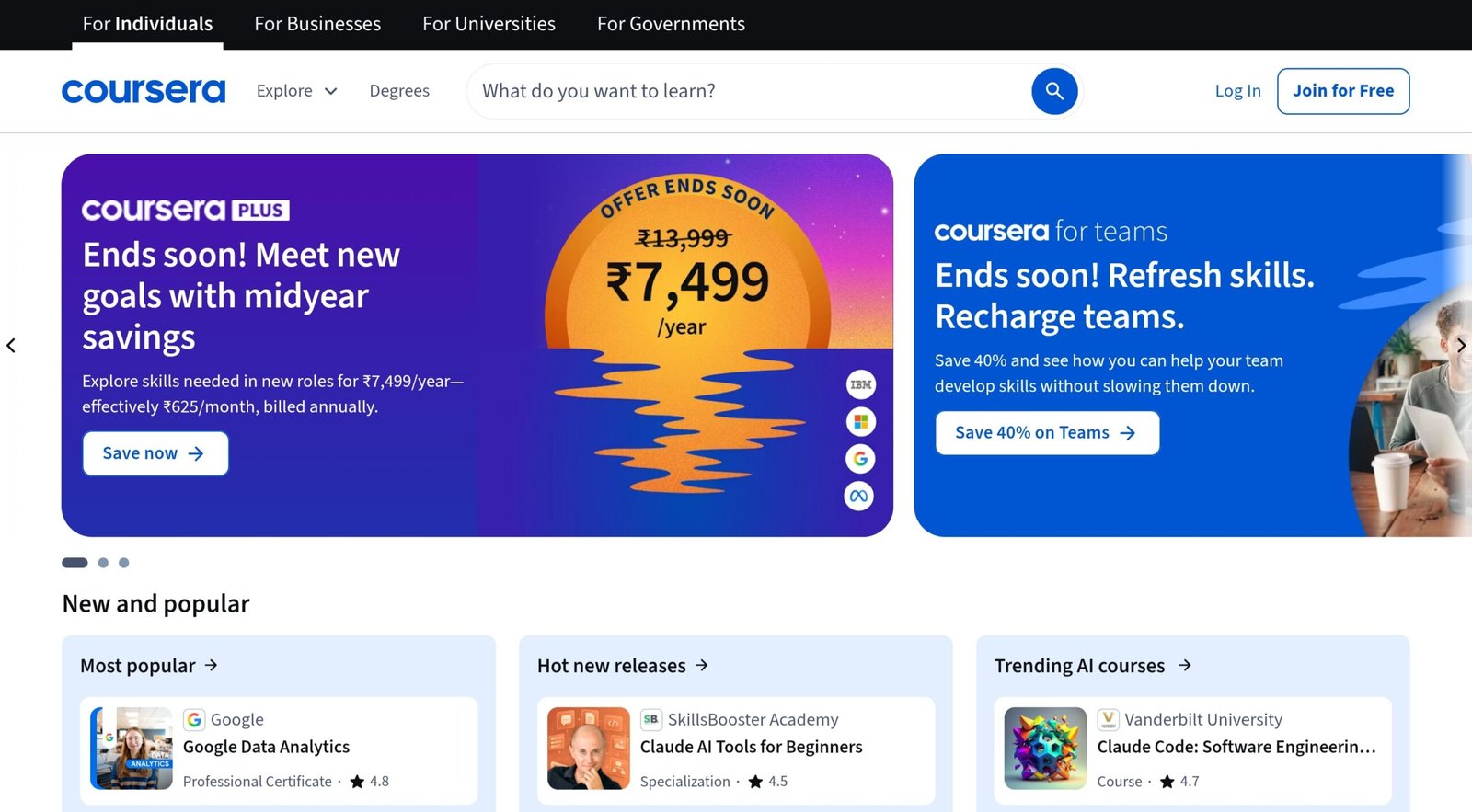
Coursera’s strength is that the content comes from universities and companies rather than a pure open marketplace. Whether that is worth paying for depends on whether you will finish what you start, because the subscription charges you whether or not you do.
- What is Coursera?
- Coursera pricing: every option explained
- Is Coursera Plus worth it?
- How to use Coursera for free
- Is Coursera accredited?
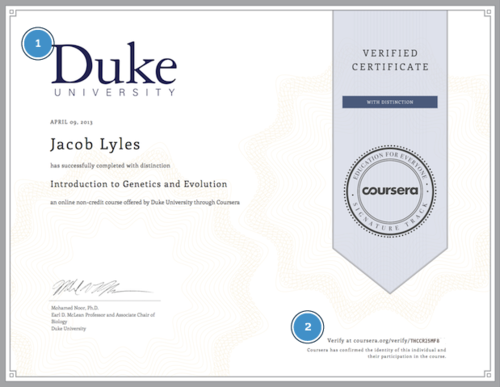
- Are Coursera certificates worth it?
- Course library and quality
- Free trial, refunds and cancelling
- Coursera vs Udemy vs LinkedIn Learning
- Coursera review: pros and cons
- Final verdict
- FAQ
What Is Coursera?
Coursera is an online learning platform where universities and companies publish their own courses. Its pages say you can learn from 350+ leading universities and companies, with Google, IBM, Meta, Microsoft, Stanford, the University of Michigan and Duke among the partners shown, and more than 10,000 courses, Projects, Specializations and Professional Certificates in Coursera Plus alone. Coursera also hosts degree programs, which are awarded by the partner universities.
Coursera Pricing: Every Option Explained
Coursera sells access in several ways. This is how its own pages describe them:
| Option | Price | What you get |
|---|---|---|
| Audit / free access | Free | Lectures and readings on many courses, with no certificate or graded work |
| Individual courses and Specializations | $49 to $79 per month (visit the course page for the exact price) | A certificate on completion. You pay once for a single course or subscribe to a bundled Specialization |
| Coursera Plus, monthly | $59 per month, with a 7-day free trial | Unlimited access to over 90% of courses, Projects, Specializations and Professional Certificates, cancel anytime |
| Coursera Plus, annual | $399 per year (about $33 a month) | The same access, paid upfront, with a 14-day money-back guarantee |
| Coursera for Teams | Per user for 12 months | For up to 125 employees, with everything in Coursera Plus plus analytics and reporting |
| MasterTrack Certificates and degrees | Varies by program | Graduate-level programs and full degrees from partner universities. Not included in Coursera Plus |
Is Coursera Plus Worth It?
The maths is simple. If you plan to complete only one Specialization at $49 to $79 a month over a few months, buying that program on its own is likely cheaper. If you plan to take several courses or certificates in a year, Plus costs the same whichever you start, so the more you finish, the more you save. Coursera says learners taking more than one course regularly could save up to 30% a month.
One detail that catches people out: Coursera states that existing Specialization subscriptions are not cancelled automatically when you start Plus. If you were already paying for a Specialization, cancel it yourself so you are not billed for both. Your progress is saved.
How to Use Coursera for Free
- Audit mode: many individual courses offer an option to audit, which gives free access to lectures and readings without graded work or a certificate. Not every course offers it, so look for the audit link when you enroll.
- Financial aid: many courses show a financial aid option next to the enroll button. Eligible learners apply with a short form, and approved aid can reduce or waive the fee. It is reviewed rather than automatic, so apply before you need the certificate.
- Free trial: the monthly Coursera Plus plan has a 7-day free trial. Coursera captures your payment details at sign-up but does not charge you until the trial ends, so cancel during the trial if you do not want to continue.
Is Coursera Accredited?
Coursera is a platform, not a university, so the company itself is not an accredited institution. Accreditation applies to the schools and programs that award a credential.
- Degrees: Coursera’s degree programs are awarded by partner universities, so their accreditation comes from those universities. Check the specific university and program, since accreditation is an institution-level question.
- Courses, Specializations and Professional Certificates: these are certificates of completion and are not degrees. Some carry an American Council on Education (ACE) credit recommendation. Coursera lists programs such as the Google Project Management, Google UX Design, Google Data Analytics and Google IT Support certificates, and IBM’s Data Science, Data Analyst and Cybersecurity Analyst certificates. It says the Google IT Support certificate has a recommendation of 15 college credits.
- Credit transfer: an ACE recommendation does not guarantee credit. Coursera notes that acceptance of credits is always at the sole discretion of the receiving institution, so ask your target school first.
- Regulated professions: for fields such as medicine, law or licensed engineering, a certificate does not replace the accredited degree and licensing that the profession requires.
Are Coursera Certificates Worth It?
They are useful as proof that you completed structured learning from a recognized university or company, and you can add them to your resume and LinkedIn profile. Coursera says 91% of learners report a positive career outcome, which counts things like new opportunities, increased knowledge or improved performance at work. That is Coursera’s own survey figure and a broad definition, so do not read it as a job placement rate.
Treat a certificate as a supporting signal, not a replacement for a degree or for demonstrated skills. A portfolio of projects and the ability to discuss your work will matter more to most employers.
Course Library and Quality
Because courses come from universities and companies, quality is more consistent than in an open marketplace where anyone can publish. The catalog is also more structured: single courses, hands-on Projects, multi-course Specializations, Professional Certificates and degrees form a ladder from a short lesson to a full qualification. The trade-off is that Coursera’s catalog is smaller than Udemy’s, so for a narrow technical topic Udemy may have more choice.
Free Trial, Refunds and Cancelling
- Monthly Plus: a 7-day free trial, then $59 a month. Cancel during the trial and you will not be charged.
- Annual Plus: paid upfront, with up to 14 days to request a refund from your My Purchases page. Coursera warns that any certificates you earn in that period are revoked if you take the refund.
- One-time purchases: Coursera’s refund policy generally allows a refund within 14 days of payment for course and Specialization purchases, with limits once you earn a certificate. Read the policy for your exact purchase.
- Monthly charges: third-party guides report that monthly subscription charges are generally not refundable after checkout. Cancel before your renewal date rather than relying on a refund.
Terms can change, so read Coursera’s refund policy before you pay.
Coursera vs Udemy vs LinkedIn Learning
One change matters when comparing these platforms. Coursera completed an all-stock combination with Udemy on May 11, 2026, and Udemy is now a wholly owned subsidiary of Coursera, according to Coursera’s SEC filing. At the time of the merger both platforms were reported to be operating separately with no immediate changes to access, subscriptions, pricing or certificates, so treat them as separate products for now and check for updates.
| Factor | Coursera | Udemy | LinkedIn Learning |
|---|---|---|---|
| Content source | Universities and companies | Independent instructors in an open marketplace | Curated library built into LinkedIn |
| How you pay | Subscription, per program or per degree | Mostly per course | Subscription, or included in LinkedIn Premium |
| Credentials | Certificates, plus degrees awarded by partner universities | Certificates of completion | Certificates you can post to your LinkedIn profile |
| Best for | Structured paths and recognized partner credentials | One-off, narrow or low-cost skills | Professional skills with profile visibility |
For detail on the others, see our Is Udemy Worth It review, Is LinkedIn Learning Worth It review and Skillshare vs Udemy comparison.
Coursera Review: Pros and Cons
- ✓ Content from 350+ universities and companies
- ✓ Degrees from partner universities, plus certificates and Professional Certificates
- ✓ Free audit on many courses and a financial aid option
- ✓ Coursera Plus covers over 90% of courses, Projects and certificates
- ✓ Some programs have an ACE credit recommendation
- ✕ Several pricing routes make it easy to pick the wrong one
- ✕ Some courses and programs are excluded from Plus, and degrees never are
- ✕ Certificates are not degrees, and credit transfer is not guaranteed
- ✕ Monthly charges are generally not refundable
- ✕ Smaller catalog than Udemy for narrow topics
Final Verdict: Is Coursera Worth It?
Pay for it if you will finish multiple courses or a Professional Certificate this year, want a recognized partner credential, or are considering a degree. In that case Coursera Plus is likely to cost less than paying program by program.
Skip paying if you want one topic out of curiosity. Audit it for free, apply for financial aid if you need the certificate, and use the 7-day Plus trial to test the platform.
Best approach: pick the specific program you want, check its page for the Coursera Plus badge, compare Plus with the individual price, and only choose the annual plan once you are confident you will keep using it.
Frequently Asked Questions
Is Coursera worth it?
It can be if you will complete several courses or a Professional Certificate and want a recognized partner credential. If you only want one topic, free audit mode or financial aid is usually enough.
Is Coursera free?
Partly. Many courses can be audited for free, which gives lectures and readings without graded work or a certificate. Certificates need payment or approved financial aid, and Coursera Plus is a paid subscription.
Is Coursera legit?
Yes. Coursera works with 350+ universities and companies, and its degrees are awarded by partner universities. It is a publicly traded company that completed its merger with Udemy in May 2026.
Is Coursera accredited?
Coursera itself is a platform, not an accredited institution. Its degrees are awarded by partner universities, whose accreditation applies. Courses and certificates are not degrees, though some carry an ACE credit recommendation that a school may or may not accept.
Are Coursera certificates worth it?
They are a useful resume and LinkedIn signal that you completed structured learning from a university or company. They do not replace a degree, and employers will also look at your projects and experience.
How much is Coursera Plus?
Coursera Plus costs $59 a month with a 7-day free trial, or $399 a year with a 14-day money-back guarantee. It includes over 90% of courses, Projects, Specializations and Professional Certificates, but not degrees or MasterTrack programs.
Does Coursera Plus include Google and IBM certificates?
Most Professional Certificates are included, but Coursera says certain Specializations and Professional Certificates are excluded. Look for the Coursera Plus badge on the program page or check Coursera’s list of included content before subscribing.
What is Coursera’s refund policy?
Annual Coursera Plus has a 14-day money-back guarantee, and certificates earned in that period are revoked if you take the refund. The monthly plan has a 7-day free trial, and monthly charges are generally not refundable after checkout. One-time course purchases have their own refund terms, so read the policy.
Coursera vs Udemy: which is better?
Coursera suits structured paths and credentials from universities and companies. Udemy suits narrow, low-cost topics from independent instructors. Coursera now owns Udemy after a May 2026 merger, but the platforms were reported to be operating separately at the time.