
Freelance Platform Reviews · Updated September 2026
Is Indeed Legit in 2026? An Honest Review (Owned by Recruit Holdings)
Indeed is the world’s most-visited job site — but because it aggregates listings from thousands of sources, the real question isn’t whether Indeed itself is legitimate, it’s how to tell which individual job postings are. Here’s the full, honestly sourced picture.
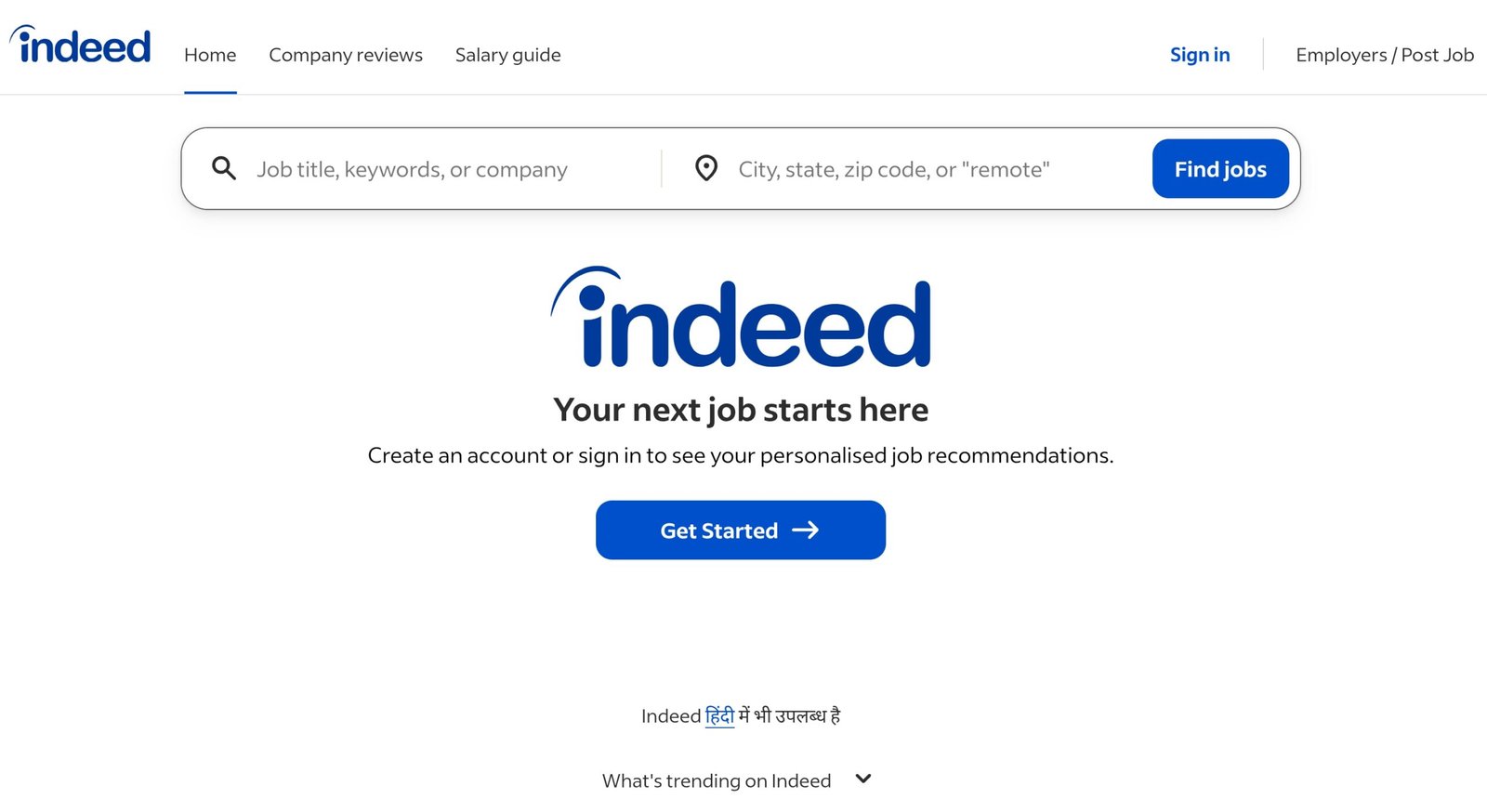
Indeed itself is a legitimate, well-established company owned by a publicly traded parent. It’s free for job seekers and safe to use. The real risk isn’t the platform — it’s that Indeed aggregates postings from thousands of external sources, so individual scam listings can appear alongside real ones, the same way they can on any large job board.
What Is Indeed?
Indeed is a job search engine founded in November 2004 by Paul Forster and Rony Kahan, headquartered in Austin, Texas, with a second major office in Stamford, Connecticut. Rather than only hosting its own listings, Indeed aggregates job postings from thousands of external sources — company career pages, staffing firms, and other job boards — alongside direct employer postings, making it searchable in one place. It’s the most-visited job site in the world by traffic (per Comscore), operating in 60+ countries and 28 languages.
The platform’s scale is its greatest strength and its most persistent weakness. With millions of active listings at any given time, it offers unmatched reach for job seekers. However, the sheer volume and the aggregation model mean that quality control is an ongoing challenge, a reality that anyone asking “is Indeed legit” needs to understand before diving in.
Comparing job search platforms?
See our reviews of two other job-focused platforms: Is FlexJobs Legit (a paid, hand-screened alternative) and Is Remote.co Legit (a free, remote-focused alternative).
Is Indeed Legit?
Yes. Indeed has been operating for over 20 years and has been owned since October 2012 by Recruit Holdings Co., Ltd., a Japanese HR technology company. Recruit Holdings itself is publicly traded on the Tokyo Stock Exchange (ticker: 6098) and remains listed there today. That means Indeed’s parent company is currently subject to public financial disclosure requirements on one of the world’s major stock exchanges, a meaningful trust signal beyond Indeed’s own longevity and scale.
In the interest of full transparency: like many large tech and HR companies, Indeed has gone through several rounds of layoffs in recent years, including cuts in 2023, 2024, and 2025 tied to broader hiring-market slowdowns. In July 2025, Indeed and its sister company Glassdoor together laid off approximately 1,300 employees, representing about 6% of the HR technology segment’s workforce, as parent company Recruit Holdings restructured to adapt to the evolving landscape, particularly the impact of AI. This reflects normal corporate restructuring at scale, not instability or wrongdoing — Indeed remains the dominant job site globally throughout this period. As of late 2025, Indeed’s global workforce stood at around 11,000 employees. For job seekers, these corporate changes have not affected the core functionality or safety of the platform itself.
Is Indeed Free?
Yes, completely free for job seekers — searching, applying, uploading a resume, and setting job alerts cost nothing. Indeed generates revenue entirely from the employer side, primarily through pay-per-click sponsored job listings and pay-per-applicant pricing for some listings. This free-for-seekers model is a key reason why Indeed remains the go-to platform for millions of job hunters worldwide, and it’s a legitimate, sustainable business model that has been in place for over two decades.
How to Know If a Job on Indeed Is Legit
This is the question that actually matters most, since Indeed aggregates postings from external sources it doesn’t fully control. The scale of the problem is significant: according to a 2025 survey of over 1,200 U.S. adults, 60% of job seekers encountered fake job postings, and 25% actually fell for them. Fake job listings were most often found on Indeed (56%), followed by LinkedIn (37%) and Facebook (35%). This isn’t a reflection of Indeed’s legitimacy as a company — it’s a consequence of its aggregator model, which opens the door for scammers to slip through the cracks.
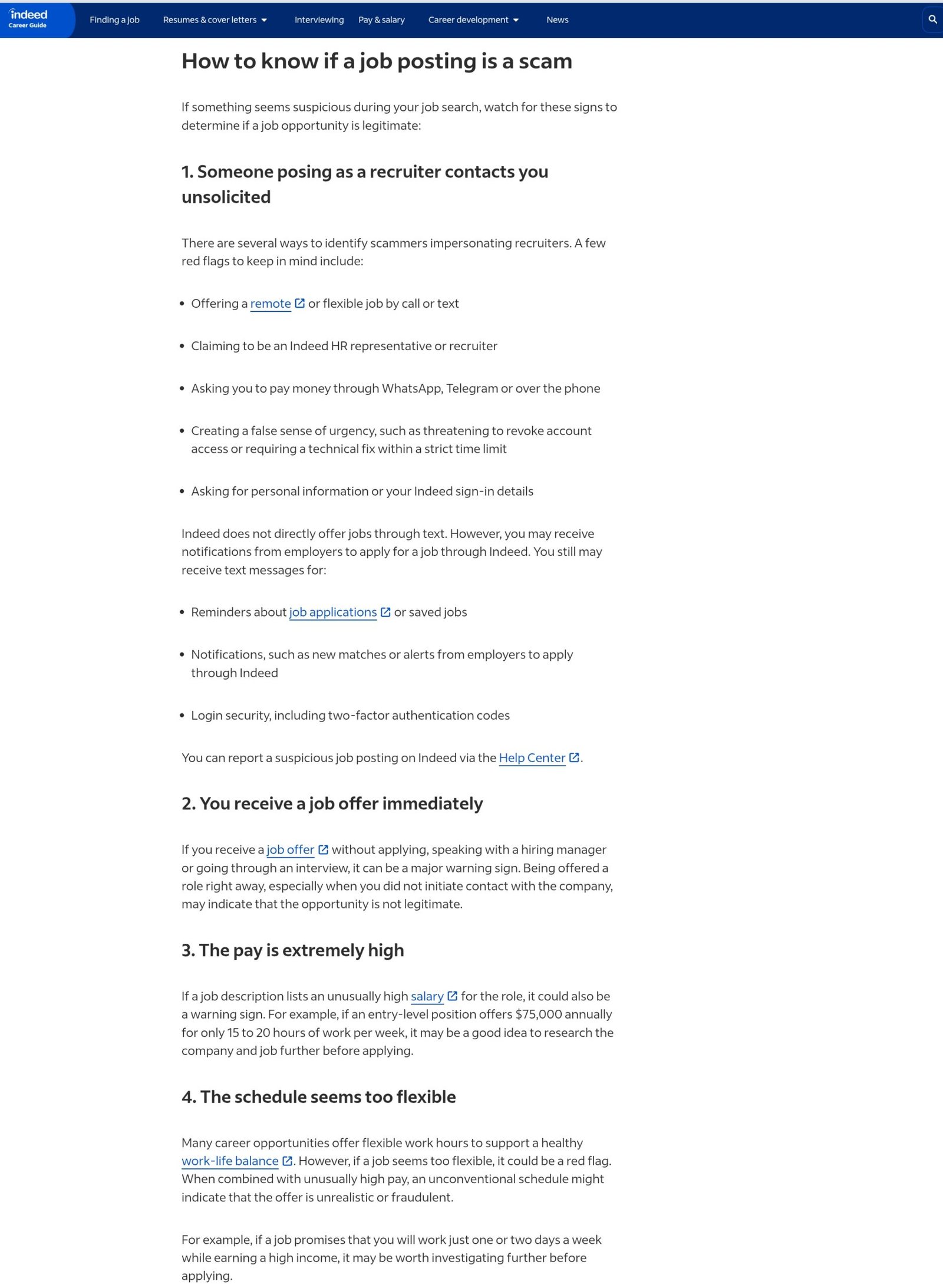
Indeed itself publishes official guidance on spotting scam listings, and the common red flags line up with scam patterns across the job search industry generally. According to Indeed’s Trust & Safety team, scammers are increasingly taking advantage of a slowing job market, and some are even posing as Indeed recruiters. Here’s what to watch for:
- Generic email addresses — If the email doesn’t exactly match a company domain (like @indeed.com), be suspicious. Established companies use email addresses that match their websites.
- Unsolicited texts or calls — Indeed will never reach out to job seekers offering employment through social media or text messages. Only trust contacts or numbers listed on the company website.
- Dream offers that feel too good — $500/day for one hour of work? Steer clear of vague “work from home” offers, or companies with no physical address, even for remote work.
- Requests for payment or banking details — Any request for payment, banking details, or personal financial information before you’ve even interviewed is a major red flag. Never send payment to a potential employer or share personal information over text.
- Vague job descriptions — Valid job offers include plenty of detail. They clearly explain who the company is, what the role involves, and what qualifications are required. Scammers keep things vague on purpose.
- Pressure to act immediately — Urgency tactics are a classic scam indicator. Legitimate employers give you time to consider an offer.
- Communication moved off-platform — If the conversation moves immediately to text or a third-party messaging app instead of Indeed’s own messaging, proceed with caution.
If a listing shows these signs, report it directly through Indeed’s reporting tool rather than engaging further. Indeed does actively remove reported scam postings, but as with any aggregator, some slip through before removal. Indeed’s Help Center provides a dedicated article on what to do if you may have been scammed, including steps to protect yourself and report the fraud.
Proactive Measures: How to Find Legit Jobs on Indeed
Rather than simply reacting to red flags, you can take proactive steps to increase your chances of encountering legit jobs on Indeed. Here are several strategies that experienced job seekers use:
- Verify the employer independently. Before applying, look up the company on LinkedIn, check their official website, and see if they have a physical address. If the job is listed on Indeed but not on the company’s own careers page, that’s a yellow flag.
- Check the company’s email domain. As Indeed’s own guidance advises, legitimate companies use email addresses that match their website domain. A recruiter contacting you from a Gmail or Yahoo address should be treated with suspicion.
- Look for salary transparency. While not a foolproof indicator, legitimate postings are increasingly transparent about compensation. Vague promises of “competitive pay” combined with unrealistic earning potential are worth scrutinizing.
- Use Indeed’s advanced filters. Indeed offers filters for company rating, salary estimates, and remote options. Filtering by companies with established reviews on Indeed or Glassdoor can help narrow down to more reputable employers.
- Trust your instincts. If something feels off, it probably is. Indeed’s own safety guidance emphasizes that if an offer sounds too good to be true, it likely is, and you should block the sender and report the spam.
- Report suspicious listings. Indeed’s “Report a Job” feature allows job seekers to directly report jobs that may violate Indeed’s Terms of Service or Job Posting Policies, including fraudulent, spammy, or fake listings. By reporting, you help protect other job seekers and contribute to a safer platform for everyone.
Indeed and Glassdoor: How Are They Related?
Indeed and Glassdoor are sister companies, not the same product — both are owned by Recruit Holdings’ HR Technology division, with Glassdoor acquired separately in 2018. They remain distinct platforms with their own branding and purposes (Indeed for job search, Glassdoor for company reviews and salary transparency), though the two share underlying technology infrastructure as part of Recruit Holdings’ broader operations. In fact, the two platforms are increasingly integrated — when you research a company on Indeed, you’ll often see Glassdoor ratings and reviews surfaced directly in the listing. If you’re researching a potential employer, using both together — Indeed for the listing, Glassdoor for company reviews — is a reasonable due-diligence combination that can help you spot red flags before you apply.
Common Real Complaints
Beyond the aggregator-scam issue above, two other themes come up regularly in user feedback:
- Duplicate or stale listings — because Indeed pulls from many external sources, the same job can appear multiple times, and some listings persist after a position is filled. This is an inherent challenge of the aggregation model and one that Indeed has been working to address with improved listing management tools for employers.
- Application black holes — as with most large job boards, high applicant volume means many applications never receive a response, which can feel discouraging even though it’s not unique to Indeed. With millions of applicants competing for roles, the signal-to-noise ratio is inherently low, and this is a frustration shared across all major job platforms.
Pros and Cons
- Completely free for job seekers, no subscription required
- Massive listing volume from thousands of aggregated sources plus direct postings
- Owned by a publicly traded parent company (Recruit Holdings, Tokyo Stock Exchange)
- Official scam-reporting tools and published safety guidance
- Available in 60+ countries and 28 languages
- Integrated with Glassdoor for company research
- Aggregated listings mean occasional scam postings slip through before removal
- Duplicate and stale listings are common given the aggregation model
- High applicant volume on popular postings means many applications go unanswered
- Recent rounds of parent-company layoffs, though not unique to Indeed in this market
- Scam prevalence is a documented issue — 56% of job seekers encountered fake listings on Indeed in 2025
Is Indeed Worth It?
Worth it if: you want the largest possible pool of job listings in one free search, and you’re willing to apply basic scam-awareness judgment to individual postings, the same way you would on any large aggregator. For the vast majority of job seekers, Indeed remains an essential tool in the job search arsenal — it’s free, comprehensive, and backed by a legitimate, publicly traded parent company.
Pair it with: a more curated platform if you want lighter screening burden — see our Is FlexJobs Legit review for a paid, hand-vetted alternative, or our Is Remote.co Legit review for a free, remote-specific option with employer verification. For the best results, use Indeed as your broad search engine and supplement it with niche platforms that pre-screen employers.
Indeed Alternatives
If you want a smaller, more curated pool of listings instead of Indeed’s aggregation model, there are several strong alternatives worth exploring. LinkedIn remains the leading professional networking platform with robust job search capabilities and strong verification features for employers. FlexJobs offers a paid, hand-vetted alternative where every listing is manually screened before going live. Remote.co provides a free, remote-specific option with employer verification, making it a solid choice for remote job seekers who want to reduce their exposure to scam listings.
Our Is FlexJobs Legit review and Is Remote.co Legit review both cover platforms that manually screen employers before listings go live, which can significantly reduce the mental overhead of constantly vetting every posting yourself. For many job seekers, the best approach is a hybrid one: use Indeed for its unmatched reach, but supplement it with these curated platforms for higher-confidence applications.
Frequently Asked Questions
Is Indeed legit?
Yes. Indeed has operated for over 20 years and is owned by Recruit Holdings, a company publicly traded on the Tokyo Stock Exchange. It’s free for job seekers and legitimate, though individual aggregated listings should still be evaluated carefully.
Are jobs on Indeed legit?
The vast majority are, but because Indeed aggregates postings from thousands of external sources, occasional scam listings can appear before they’re reported and removed. A 2025 survey found that 60% of job seekers encountered fake job postings, with 56% of those fake listings appearing on Indeed. Basic scam-awareness checks apply the same way they would on any large job board.
How do I know if a job on Indeed is legit?
Watch for requests for payment or banking details before an interview, vague descriptions with unusually high pay, pressure to move communication off-platform immediately, and urgency tactics. Verify the company independently and check that email addresses match the company’s official domain. Report suspicious listings directly through Indeed’s reporting tool.
Is Indeed free?
Yes, completely free for job seekers. Indeed generates revenue from employers through pay-per-click sponsored listings and pay-per-applicant pricing.
Is Indeed the same company as Glassdoor?
No, they’re sister companies. Both are owned by Recruit Holdings’ HR Technology division, but they remain distinct platforms with separate branding and purposes.
Who owns Indeed?
Indeed has been owned by Recruit Holdings Co., Ltd., a Japanese HR technology company, since October 2012. Recruit Holdings itself is publicly traded on the Tokyo Stock Exchange (ticker: 6098).