
Is Remote.co Legit in 2026? Honest Review of Pricing, Reviews and Refunds
Is Remote.co legit? Yes, it is a real, long-running remote job board, but it is no longer simply a free one. Remote.co’s own pricing page now lists a paid membership for job seekers, with the same prices as FlexJobs, and that is the source of most complaints in Remote.co reviews. This review covers what Remote.co costs, what you get, how its refund and cancellation terms work, what Trustpilot reviewers say, how to avoid look-alike sites and job scams, and who should pay. Plan and policy details come from Remote.co’s own pages, checked in late September 2026.
Remote.co is a legitimate job board that says every listing is reviewed to filter out scams, duplicates and low-quality postings, and many reviewers say it delivers. The catch is cost and billing: a $2.95 trial that renews at $23.95 every four weeks, and reviewers who struggled to find how to cancel. Treat it as a paid tool, not a free site, and compare it with free boards before you pay.
What Is Remote.co?
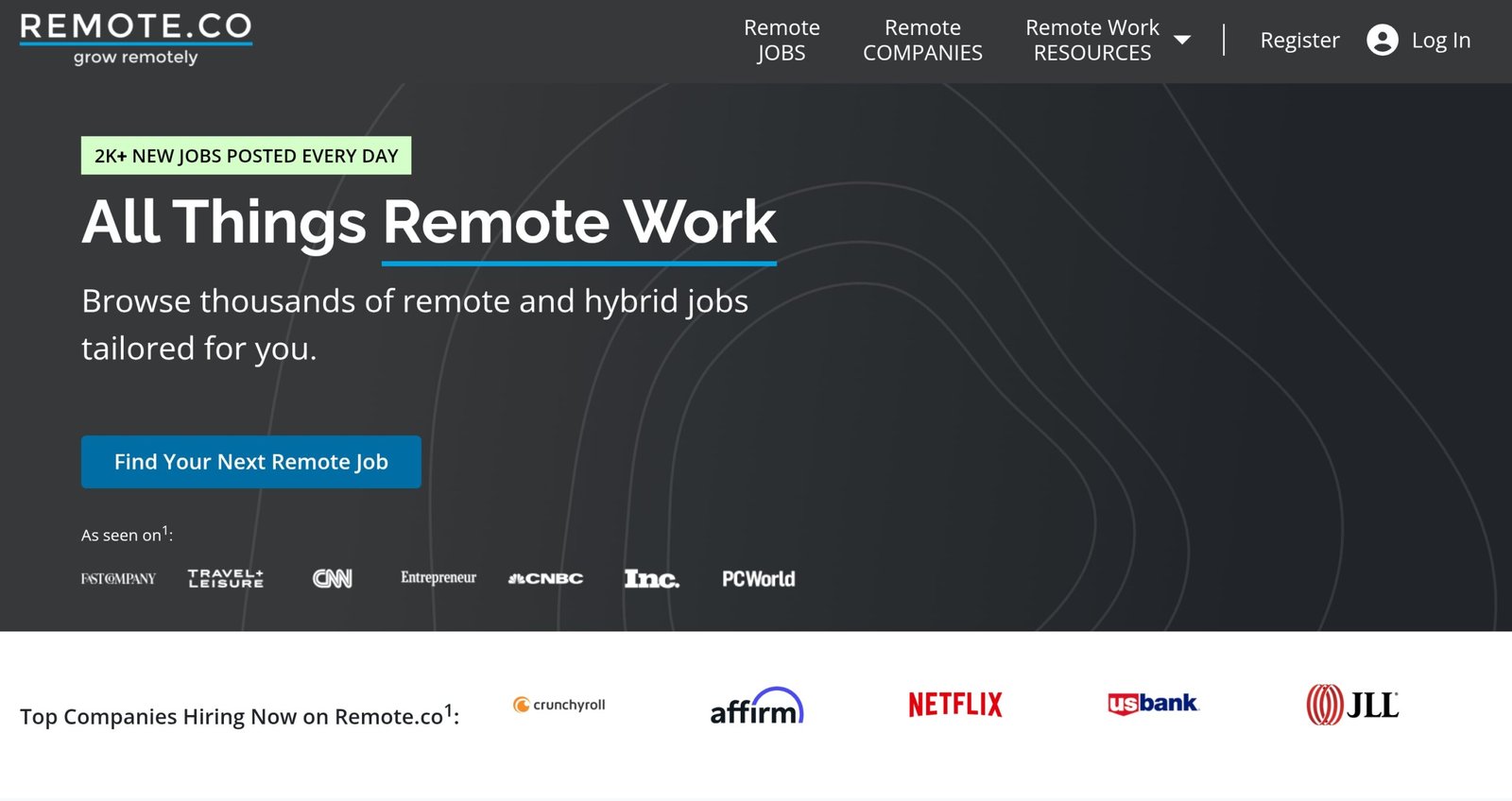
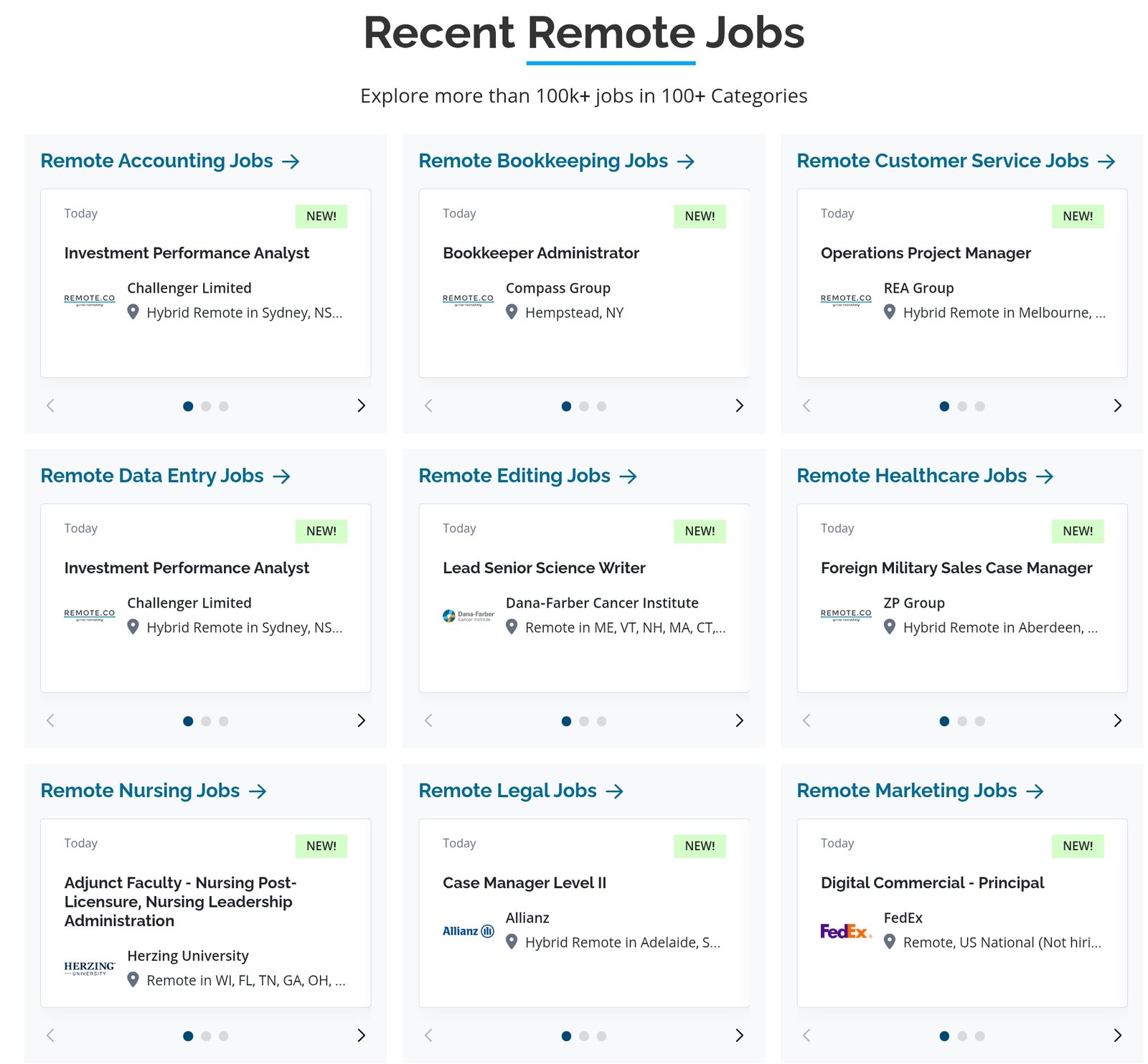
Remote.co is a job board and resource site for remote work. Its homepage describes thousands of remote and hybrid jobs across 100+ categories, with more than 2,000 new jobs posted every day, and its pricing page cites 227,000 jobs available. Those figures come from Remote.co itself and differ between pages, so treat them as rough. It also publishes Q&As with 108 remote-friendly companies, interviews with remote workers and a library of remote work articles.
Companies shown as hiring on its homepage include New York Life, Calm, Automattic, U.S. Bank, Kaplan, CVS Health, Cloudflare, Salesforce and Amazon. Remote.co notes that using these names does not imply endorsement or affiliation. The jobs on its homepage also include hybrid roles and roles limited to certain US states, so check the location line on each listing.
Is Remote.co Legit?
Yes. Remote.co has operated since 2015, publishes a named contact address and a support email, and has a few hundred public Trustpilot reviews. Specific signals:
- Company details: its About page lists Bold LLC at an address in Guaynabo, Puerto Rico as the mailing contact.
- Screening: Remote.co says every job is reviewed to help filter out scams, duplicates and low-quality postings.
- Fraud education: it publishes a Job Scam Awareness page that explains common scams and how to report them.
- Reviews: Trustpilot has shown Remote.co at about 4.1 out of 5 from nearly 400 reviews, with most reviewers positive about listing quality.
Is Remote.co Free?
Not for most job seekers any more. Remote.co’s pricing page offers a paid job seeker membership and explains that people pay because the subscription supports sourcing, reviewing and maintaining its listings. Its articles, company Q&As and some public pages can be read without paying, but reviewers on Trustpilot report being sent to a subscription page when they try to open or apply to jobs, and other review sites that call Remote.co “completely free” appear to be out of date. Check the sign-up flow yourself before assuming access is free.
How Much Does Remote.co Cost?
These are the three plans on Remote.co’s own pricing page:
| Plan | Price | Renewal terms |
|---|---|---|
| 14-day trial | $2.95 | Then auto-renews at $23.95 billed every four weeks |
| 3-month plan | $9.95 a month ($29.85 billed every three months) | Cancel any time |
| Annual plan | $5.95 a month ($71.40 billed annually) | Cancel any time |
A membership includes access to listings across 50+ career fields, an ad-free experience, advanced filters, saved searches and alerts. Remote.co says all plans give the same access and that longer plans just cost less per month.
Do the sums before you start the trial. If the $2.95 plan is left to renew, $23.95 every four weeks is 13 charges a year, about $311, compared with $71.40 for the annual plan. If you only need a few weeks, set a reminder before the trial ends.
Refunds and Cancelling
- Money-back guarantee: Remote.co says you can cancel and request a refund within 14 days of signing up by contacting support through its About and Contact page.
- Cancelling: Remote.co says you can cancel at any time. Some Trustpilot reviewers say they could not find the subscription management option and had to contact support, and Remote.co’s replies state that cancelled subscriptions will not be charged again.
- Keep evidence: take a screenshot of the plan and price you chose, and note the date you requested any refund.
Remote.co vs FlexJobs
The two sites are closely connected. Remote.co’s pricing, trial terms and refund window match FlexJobs’ pricing exactly, FlexJobs’ site lists Remote.co as a partner site, and both sites’ contact details point to Bold. Reviewers also note that Remote.co is related to FlexJobs. We would treat them as sister services that sell similar memberships.
| Factor | Remote.co | FlexJobs |
|---|---|---|
| Trial | $2.95 for 14 days, then $23.95 every 4 weeks | $2.95 for 14 days, then $23.95 every 4 weeks |
| 3-month and annual | $9.95 a month; $5.95 a month | $9.95 a month; $5.95 a month |
| Refund | 14-day money-back guarantee | 14 days of account creation or renewal |
| Focus | Remote and hybrid jobs plus remote work Q&As and articles | Remote, hybrid, part-time and flexible jobs, with company profiles and an AI application tool |
If you are choosing between them, read our Is FlexJobs Legit review and compare which one shows more relevant jobs for your field and location during the trial, rather than paying for both.
Remote.co vs Remote.com and Look-Alike Sites
Several sites have similar names. Remote.com is a separate company that provides Employer of Record, payroll and compliance services for businesses hiring internationally, not a job board for individuals. Other sites with similar names, such as remoteco.work, are also different websites with their own models. Check the exact domain, remote.co, before you enter payment details or personal information.
Remote.co Reviews: What Trustpilot Shows
Trustpilot is the main public source of Remote.co reviews. Its profile has shown a TrustScore of about 4.1 out of 5 from nearly 400 reviews, with roughly six in ten reviews five-star and about one in ten one-star in one snapshot. Remote.co’s pricing page also quotes selected five-star reviews, so treat those quotes as marketing and read the full Trustpilot page.
| What reviewers praise | What reviewers criticize |
|---|---|
| Legitimate-looking listings and few spam or fake postings | Subscription terms and difficulty finding how to cancel |
| Easy navigation and useful filters | Being prompted to subscribe when trying to open jobs |
| Responses to applications and no spam after signing up (in some reviews) | A 100% remote filter that still shows hybrid jobs, and little relevance for some international users |
Is Remote.co a Scam? Job Scams to Watch For
Remote.co is not a scam. It is a real business that charges for a job board membership, and the complaints are mainly about billing clarity and fit, not fake listings. Even so, job scams exist on every board. Remote.co’s fraud awareness page lists six common types:
- Phishing: a fake recruiter asks for bank details to “set up direct deposit” before an offer.
- Fake listings: a posting requires an upfront payment for training, certification or equipment.
- Credential theft: someone asks for your job board or email login.
- Employment verification scams: a request for ID or tax forms before any formal interview.
- Pay-to-play scams: a payment to guarantee an interview or placement.
- Overpayment scams: a check is sent, and you are asked to return part of it before it bounces.
Its advice: verify the employer, do not pay to work, and check that a recruiter’s email matches the company’s domain. A quick extra check is to find the same role on the employer’s own careers page before you apply.
Pros and Cons
- Established remote job board with a 2015 start
- Says every job is reviewed to filter out scams, duplicates and low-quality postings
- Large volume of listings across 50+ career fields
- Company Q&As, articles and a published fraud awareness guide
- 14-day money-back guarantee
- Not free for most job seekers, despite older articles saying so
- The $2.95 trial renews at $23.95 every 4 weeks, about $311 a year
- Some reviewers could not easily find how to cancel
- Listings include hybrid and state-restricted roles
- Similar names such as Remote.com and remoteco.work cause confusion
Is Remote.co Worth It?
Worth it if you want a curated remote job board, you will search actively for a few weeks, and you are comfortable setting a reminder to cancel or switch to a longer plan.
Not worth it if free job boards already show enough relevant remote roles in your field, you live outside the US and find few matching listings, or you do not want to manage a renewal. Try a free board first and use the trial only to test whether Remote.co shows jobs you cannot easily find elsewhere.
Frequently Asked Questions
Is Remote.co legit?
Yes. Remote.co is a real remote job board that has operated since 2015, says it reviews every listing, and has about 4.1 out of 5 on Trustpilot from nearly 400 reviews. It is a paid membership for job seekers, so read the pricing terms first.
Is Remote.co free?
Not for most job seekers. Remote.co’s pricing page lists a paid membership starting with a $2.95 14-day trial. Its articles and company Q&As can be read for free, but reviewers report being asked to subscribe to open or apply to jobs.
How much does Remote.co cost?
Remote.co lists a $2.95 14-day trial that then renews at $23.95 every four weeks, a 3-month plan at $9.95 a month billed as $29.85, and an annual plan at $5.95 a month billed as $71.40. Confirm the terms on its pricing page before you pay.
Is Remote.co the same as FlexJobs?
They are closely connected but separate sites. Their prices, trial and refund terms match, FlexJobs lists Remote.co as a partner site, and both point to Bold in their contact details. Compare them before paying for either.
Is Remote.co the same as Remote.com?
No. Remote.com is a separate company that provides Employer of Record and payroll services for businesses. Remote.co is a job board for individual job seekers. Check the exact domain before you sign up.
How do I cancel Remote.co or get a refund?
Remote.co says you can cancel at any time and request a refund within 14 days of signing up by contacting its support team. Some Trustpilot reviewers found the subscription option hard to locate, so contact support if you cannot find it and keep a record of the date.
Is Remote.co a scam?
No. It is a real business with a published address, a fraud awareness guide and a 14-day money-back guarantee. Complaints are mainly about subscription terms and cancellation, and as on any job board you should still verify employers and never pay to apply.